
The 2026 International Summer School on Physics (ISSP), “The Largest and the Smallest,” will be hosted by Zhiyuan College and Tsung-Dao Lee Institute at Shanghai Jiao Tong University from July 5 to 18. The Summer School mainly aims at providing undergraduate students with strong passion in physics from China and overseas universities with a platform to gain experience with cutting-edge research and build friendships among their peers.
The Largest and the Smallest represent the two extremes of the universe, one being the vast cosmos and the other being the tiny fundamental particles. Although they are vastly different, they are intricately connected to some extent. To understand the essence of this connection, a deep understanding of the fundamental physical laws of the universe is required. This event revolves around the vast and the minuscule. All courses and activities are conducted in English and include the following modules:
- 32 hours of specialized courses
- A series of cutting-edge academic lectures
- Team research practice projects
- "Visit SJTU" & Shanghai exploration
- Exciting cultural and sports activities
Interested students are invited to submit their online applications by April 10. All applicants will be notified of the results via email beginning mid-April..
For inquiries, please contact: binglisjtu@sjtu.edu.cn (Ms. Li, Zhiyuan College, SJTU).
Application Closed
Organizers
Zhiyuan College: A Cradle for Elite Talents
Zhiyuan College, founded in 2010, is directly funded by Ministry of Education, China. It is an elite undergraduate institute within SJTU that cultivates future leaders in science and technology. In 2016, its “Curiosity-Driven Initiative Learning” project won the “Cultivating Curiosity Award” and “Natural Sciences Award” at the Education Innovation Conference of the 3rd Global “Reimagine Education 2016”, which was jointly held by Wharton School of Business, University of Pennsylvania and International Education Rating Organization QS. In 2024, Zhiyuan College was recognized as one of the National Advanced Organizations in Education.

TDLI: A Highland for Research and Innovation
Proposed by the Nobel laureate Tsung-Dao Lee and with support and endorsement from governments and ministries at national and municipal levels, Tsung-Dao Lee Institute (TDLI) is a basic research institute established at Shanghai Jiao Tong University in November 2016, aiming to build itself as a world-leading science institute. By bringing the research to extreme environments or creating extreme conditions, TDLI strive to explore and control exotic and extreme states of matter with extreme detection methods. Eying on the greatest unsolved mysteries of the universe, TDLI is pledged to systemically assemble the teams of close to 100 scientists to carry out pioneering research and collaboration on particle and nuclear physics, astronomy and astrophysics, and condensed matter physics.

Courses & Seminars
Astrophysics of Compact Objects, Transients and Exoplanets
Instructor: Dong Lai
Compact objects (white dwarfs, neutron stars and black holes) are the end states of the evolution of normal stars. They are associated with some of the most exotic phenomena and environments in the universe. They have been observed in all electromagnetic wave bands and in gravitational waves. Their strong gravities, high densities and magnetic fields provide a unique avenue for exploring physics under extreme conditions. On the other hand, many Sun-like stars have been found to host planets. These "exoplanets" have diverse properties and often quite different from the solar system counterparts. Their extreme properties challenge our understanding of planet formation. The studies of compact objects and exoplanets constitute some of the most exciting areas of astrophysics research.
This mini-course will review the basic physics and astrophysics of compact objects, and various time-domain transient phenomena associated with them (e.g. supernovae, gamma ray bursts, tidal disruption events). Contemporary research topics will be introduced along the way. The course will also review some current observational puzzles related to exoplanets, and the physics needed for their understanding.
Mysteries of the particle world
Instructor: Xiangdong Ji
This is an introduction to particle physics, requiring little previous knowledge. The first 2 hrs will cover basic facts about particle physics including discovery of various elementary particles and three basic interactions (strong, weak and electromagnetism). The following 4 hrs will cover two important frontiers of particle physics research: neutrinos and dark matter. The final 2 hrs will discuss cosmic history in the view of particles. In particular, we will try to explain the mystery of matter dominance over anti-matter.
Superfluidity and Superconductivity: Fundamentals and Frontiers
Instructor: Nanlin Wang
Superfluidity and superconductivity are two macroscopic quantum phenomena that occur at low temperatures. They are classic examples of emergent phenomena in condensed matter physics, where numerous particles (bosons or fermions) condense into a phase-coherent collective entity. They exhibit unique properties such as zero resistance (superconductivity) or zero viscosity (superfluidity) and hold significant practical applications. Despite their distinct manifestations, both phenomena are rooted in the profound principles of quantum mechanics. This lecture will introduce their fundamental properties, physical foundations, and some recent advances, including:
- Superfluid 4He and 3He
- Fundamentals of superconductivity
- Unconventional and high-temperature superconductors
- Collective excitations of superconducting condensate
Subjects of Seminars
In addition to the courses, the Summer School also features a series of seminars, with topics including Direct Dark Matter Detection, Deep Sea Neutrino Telescope, Muon Physics, Origin of Mass, Dark Photons and Dark Matter, Exoplanets and Alien Civilizations, Black Hole Imaging, Quantum Atmosphere, Superconductivity, Quantum Computing, Quantum Materials and new states of matter, Large Scale Structural Evolution of the Universe, Laboratory Astrophysics, Axion Dark Matter, and AI for Physics.
Instructors

Professor Jun Ye is a physicist at the U.S. National Institute of Standards and Technology (NIST), a fellow at JILA, and a professor of physics at the University of Colorado Boulder. He is a member of the National Academy of Sciences of the United States and a foreign academician of the Chinese Academy of Sciences. His work focuses on atomic, molecular, and optical (AMO) physics, including ultracold atoms and molecules, precision spectroscopy, optical frequency combs, and laser-based quantum metrology; he and his team have developed some of the world’s most precise optical atomic clocks and pioneered advances in frequency comb and precision measurement technologies, leading to numerous top scientific honors such as the I.I. Rabi Prize, the Norman F. Ramsey Prize, and the Micius Quantum Prize.
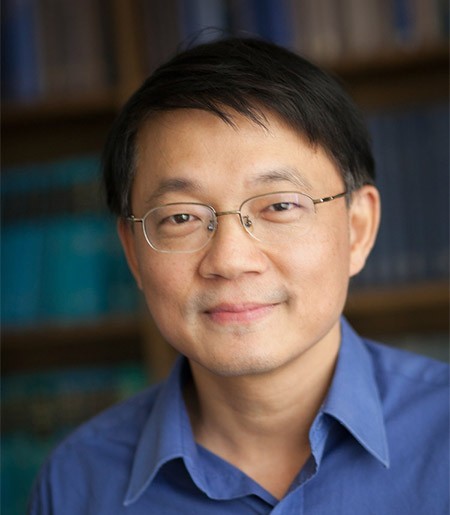
Dong Lai is a T.D.Lee Chair Professor and Astrophysics Division head at Tsung-Dao Lee Institute, Shanghai Jiao Tong University. From 1997 to 2025, he was on the faculty at Cornell University, where he was the Benson and Mary Simon Professor in Astrophysics. He has made significant contribution to the understanding of the physical processes around compact objects (black holes, neutron stars and white dwarfs), including the QED effect in radiation from magnetic neutron stars, the origin of pulsar kicks, gravitational wave sources, and accrection disks around magnetic stars and compact objects. He has also made important contributions in several areas of exoplanetary dynamics. He has received Sloan Fellowship, Simons Fellowship and distinguished graduate teaching and mentoring award from Cornell. In 2024 he received the Dirk Brouwer Award from the American Astronomical Society, the highest international award in dynamical astronomy.

Professor Xiangdong Ji is the T. D. Lee Chair Professor at Shanghai Jiao Tong University and a Distinguished University Professor at the University of Maryland. His research interests lie in the quark and gluon structure of protons and neutrons in terms of quantum chromodynamics as well as dark matter search through xenon detectors. Prof. Ji is a distinguished physicist. He earned his Ph.D. from Drexel University in 1987. He then conducted postdoctoral research at Caltech (1987-1989) and MlT (1989-1991), where he later was appointed as an Assistant Professor (1991-1996). In 1996, he joined the University of Maryland as a Professor. He has served as the Hongwen Chair Professor at Shanghai Jiao Tong University since 2009 and was later appointed the T. D. Lee Chair Professor in 2016. He is the initiator and first spokesperson of the PandaX experiment collaboration for the dark matter direct detection. He was awarded the Herman Feshbach Prize by the American Physical Society, as well as the Natural Science Award (First Class) by China's Ministry of Education, both in 2016. In 2024, he was honored with the Rui Yuan Science and Technology Award by Shanghai Jiao Tong University.

Professor Wang is a T.D. Lee Chair Professor at Tsung-Dao Lee Institute, Shanghai Jiao Tong University. He obtained his Ph.D. degree from the University of Science and Technology of China in 1992, was selected for the Chinese Academy of Sciences' "Hundred Talents Program" in 1998, and received the National Science Fund for Distinguished Young Scholars in 2000. He was a professor at the Institute of Physics, Chinese Academy of Sciences from 2000 to 2014 and a Chair Professor at the International Center for Quantum Materials Science, Peking University from 2014-2025. His research focuses on the low-temperature physical properties of superconductors and strongly correlated electron systems, equilibrium and non-equilibrium THz and optical spectroscopy, and ultrafast control of quantum materials. He has published over 350 papers with over 17,000 citations. He a Fellow of the American Physical Society.
Extracurricular Activities
Beyond the core curriculum, students will participate in complementary academic activities including interactive 'Chalk Talk' sessions and lectures.The summer school will also organize a city tour of Shanghai and a campus tour of SJTU.


Travel Grant
A Merit-Based Travel Grant is now open for international application. The grant will be awarded based on the location of the student's home university.
Asia (Apart from West Asia): 5,000 RMB
North America, Europe, Africa, and West Asia: 10,000 RMB
South America: 15,000 RMB
Oceania and other regions: 8,000 RMB
For students already in mainland China, grants cover actual travel costs.
To apply: Upload a referee's recommendation letter with your online application.
Logistics
Tuition and housing are free. Students are responsible for meals and personal expenses.
Dining: Dining options are accessible in the building of TDLI.
Insurance: Admitted students must provide proof of personal accident insurance that covers the entire duration of the summer school.
Reflections on ISSP


Highlights